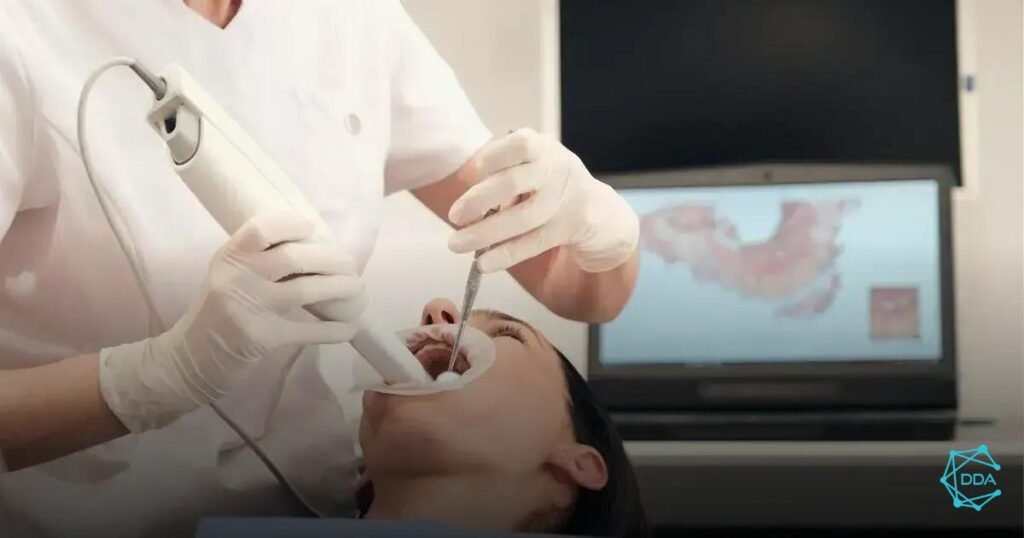
O Dental CAD/CAM software This is changing the way dental professionals work. In this article, you will learn about the main advantages of this type of technology, how it can optimize workflow, and improve the quality of treatments. With the use of CAD/CAM, dentists can create prostheses and restorations more precisely and efficiently. Keep reading to understand how this innovation can benefit your practice and your patients.
Advantages of CAD/CAM Software in Dentistry

Advantages of CAD/CAM Software in Dentistry
The use of Dental CAD/CAM software It offers several advantages for dental practice, impacting both professionals and patients. Below, we highlight the main benefits:
- Increased Accuracy: CAD/CAM software allows for the creation of highly precise restorations and prostheses, reducing the margin of error and ensuring a perfect fit.
- Speed in Service: With CAD/CAM technology, it's possible to produce parts in a single day, reducing patient waiting times and increasing the efficiency of the practice.
- Fewer Visits to the Dentist: Reducing the number of appointments needed to complete treatments provides a more convenient experience for patients.
- Customization: The software allows for the customization of prostheses and restorations, adapting them to the specific needs of each patient, resulting in a more aesthetic and functional outcome.
- Cost Reduction: Although the initial investment in CAD/CAM technology may be high, in the long run, the efficiency and reduction in material waste can lead to a significant reduction in operating costs.
These advantages make it Dental CAD/CAM software An essential tool for dentists seeking to improve the quality of their services and patient satisfaction.
How the CAD/CAM Process Works

How the CAD/CAM Process Works
The CAD/CAM process in dentistry is a combination of two technologies that work together to create high-quality dental restorations. Below, we will explain the main steps of this process:
- Digitization: The first step involves digitizing the patient's dental arch. This is done using an intraoral scanner, which captures 3D images of the mouth, allowing for precise mapping of the teeth and oral structures.
- Modeling: After digitization, the collected data is sent to design software. In this CAD (Computer-Aided Design) software, the dentist or dental technician can model the restoration, adjusting details such as shape, size, and color so that it fits perfectly with the patient's smile.
- Manufacturing: Once the design is approved, the digital file is sent to a CAM (Computer-Aided Manufacturing) machine. This machine uses techniques such as milling or 3D printing to create the restoration from materials such as ceramic or resin.
- Finish: After fabrication, the piece undergoes a finishing process, which may include polishing and color application, ensuring that the restoration has a natural appearance and blends well with the adjacent teeth.
- Installation: Finally, the restoration is installed in the patient's mouth. With the precision of the CAD/CAM process, the fit is usually perfect, resulting in a comfortable and satisfactory experience.
The CAD/CAM process not only increases the efficiency of dental work, but also delivers high-quality results, revolutionizing the way dental treatments are performed.
Comparison between Traditional Methods and CAD/CAM

Comparison between Traditional Methods and CAD/CAM
Over the years, dentistry has evolved with the introduction of new technologies, and the CAD/CAM system is one of the most significant innovations. Let's compare traditional dental restoration methods with the CAD/CAM process, highlighting the main differences:
- Treatment Time: In traditional methods, the process of creating prostheses and restorations can take several visits to the dentist, while the CAD/CAM system reduces this time, allowing production in a single day.
- Precision: The traditional method relies on physical molds, which can present errors and inaccuracies. On the other hand, CAD/CAM uses 3D scanning, ensuring that restorations are made with millimeter precision.
- Patient Comfort: With traditional methods, patients often have to deal with discomfort due to molds and multiple visits. CAD/CAM offers a more comfortable experience, since most treatments can be completed in a single session.
- Customization: While traditional methods offer limited customization options, CAD software allows dentists to create highly personalized restorations, perfectly tailored to each patient's needs.
- Cost: Initially, the investment in CAD/CAM technology may be higher than traditional methods. However, operational costs can be reduced in the long term due to increased efficiency and less material waste.
In summary, while traditional methods have their place in dentistry, the CAD/CAM system represents a significant evolution, providing benefits in terms of time, precision, comfort, and customization for patients.
Impact on Patient Experience

Impact on Patient Experience
The adoption of Dental CAD/CAM software This has a significant impact on the patient experience, transforming how dental treatments are performed. Below, we will discuss the main aspects that positively affect this experience:
- Reducing Waiting Time: With CAD/CAM, patients can receive their restorations in a single day, eliminating the need for multiple visits to the office. This not only saves time but also improves patient satisfaction with the treatment.
- Comfort During Treatment: The use of digital intraoral scanners, instead of traditional impressions, makes the process more comfortable. Patients don't have to handle materials that can cause discomfort or nausea, resulting in a more pleasant experience.
- Immediate Results: The ability to visualize and approve the restoration design in real time allows patients to play an active role in the process. This increases confidence and satisfaction, as patients can see what the final result will look like before it is made.
- Aesthetic Quality: CAD/CAM software allows for the creation of restorations with a natural fit and appearance, improving dental aesthetics. Patients are more satisfied with the results because the restorations blend seamlessly with their natural teeth.
- Less Anxiety: Reducing the number of visits and speeding up the process helps to decrease anxiety in patients who may fear dental treatment. With a more efficient procedure, the overall experience becomes less stressful.
In short, the impact of CAD/CAM software The improvement in patient experience is noticeable, resulting in faster, more comfortable and satisfactory treatments, as well as promoting a more positive relationship between dentists and patients.
The Future of Dentistry with CAD/CAM Technology
The Future of Dentistry with CAD/CAM Technology
CAD/CAM technology is shaping the future of dentistry, bringing innovations that promise to transform dental practice. Below, we explore some trends and predictions for the future of dentistry with the use of this technology:
- Integration with Artificial Intelligence: Combining CAD/CAM technology with artificial intelligence can further optimize the design and manufacturing process, allowing software to learn and improve based on data from previous treatments, resulting in even more precise and customized solutions.
- Increased Automation: The future may see an increase in the automation of manufacturing processes, where CAD/CAM machines will become even more efficient, reducing production time and increasing the capacity to serve a greater number of patients.
- Expanding Access: As technology becomes more accessible and costs decrease, more dental practices will be able to implement CAD/CAM systems, democratizing access to high-quality treatments for a wider range of patients.
- Advances in Materials: The development of new materials for restorations and prostheses that are more durable and aesthetically pleasing is constantly evolving. CAD/CAM technology will allow these materials to be used in a more effective and innovative way.
- Education and Training: With the increasing adoption of CAD/CAM technology, there will be a greater emphasis on the education and training of dentists and dental technicians. This will ensure that professionals are up-to-date with best practices and can offer maximum benefit to their patients.
These trends show that the future of dentistry It is intrinsically linked to CAD/CAM technology, which promises not only to improve the efficiency and quality of treatments, but also to transform the patient experience, making it more satisfying and accessible.